Love Your Eyes: Giving the Gift of Sight Beyond Your Lifetime
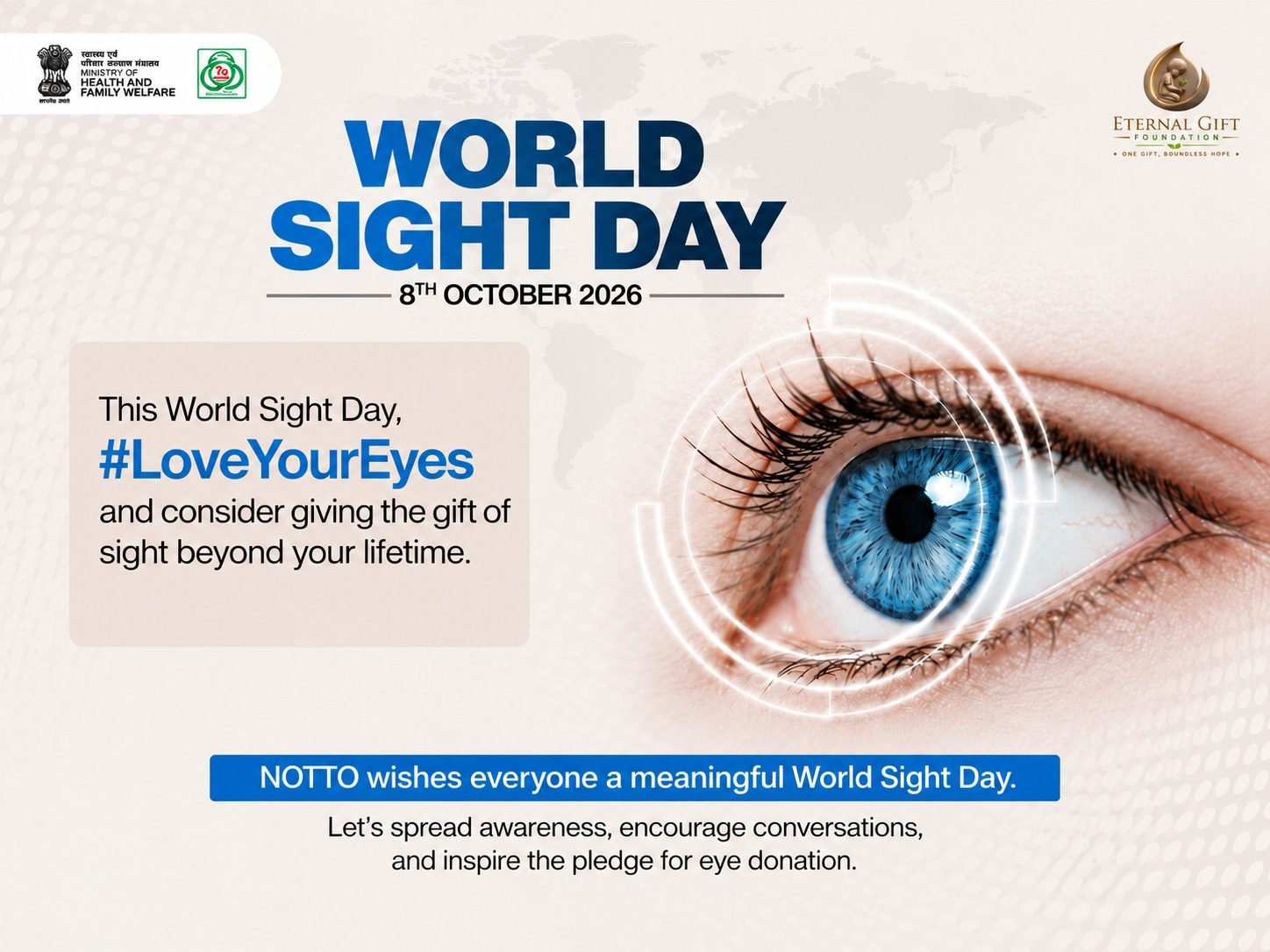
This World Sight Day, learn how to care for your eyes and how eye donation works — one simple pledge can restore someone’s sight after your lifetime.
Our vision shapes how we experience the world, from the smiles of the people we love to the colours of the season. Every year on World Sight Day — 8 October in 2026 — the world pauses to think about eye health and the many people living with visual impairment.
Together with NOTTO (the National Organ and Tissue Transplant Organisation) and the Ministry of Health and Family Welfare, Eternal Gift Foundation invites you to join the #LoveYourEyes movement: look after your vision, and consider pledging your eyes so that someone else may see.
Why eye health and eye donation matter
- Vision care comes first. Regular eye check-ups, sensible screen habits and protecting your eyes help preserve good vision for life. Many eye problems are easier to treat when they are found early.
- A legacy of light. Corneal blindness — when the clear front window of the eye becomes cloudy or scarred — is one of the leading causes of blindness in India. Much of it can be treated with a corneal transplant, and every transplant depends on a donor.
- Awareness changes minds. Myths and hesitation around organ and tissue donation often stop families from saying yes. Open conversations help more people understand eye donation — and pledge.
How to love your eyes every day
- Get your eyes tested. Have a full eye examination, and repeat it as your doctor advises — sooner if you notice blurred vision, pain, redness or flashes of light.
- Give your eyes screen breaks. Try the 20-20-20 habit: every 20 minutes, look at something about 20 feet away for 20 seconds.
- Protect them outdoors. Sunglasses that block UV light and protective eyewear at work or during sport help prevent damage and injury.
- Look after your overall health. Diabetes and high blood pressure can quietly damage the eyes. Keeping them under control — and checking them regularly — protects your vision too. Sabse Pehle Sehat, our preventive health campaign, is built on exactly this idea.
- Don’t rub or self-medicate. Avoid rubbing your eyes, and use eye drops only as advised by a doctor.
Eye donation: what every family should know
Eye donation means donating the eyes after death, so that the cornea can be transplanted to restore sight to a person with corneal blindness. A few facts help families feel confident about the decision:
- It happens only after death, with the consent of the family. That is why telling your family about your pledge matters so much.
- Time is important. The eyes should be collected within a few hours of death — ideally within six hours — by a trained eye bank team, at home or in hospital.
- Almost anyone can donate. Age, blood group, wearing spectacles, past cataract surgery, diabetes or high blood pressure do not usually prevent eye donation. The eye bank team checks for the few medical conditions that do.
- It does not disfigure the face. The procedure takes a short time and does not delay funeral arrangements.
- It is a gift, never a sale. Donation is voluntary and free; buying or selling human organs and tissues is illegal in India.
Three things you can do today
- 01#LoveYourEyes — book a comprehensive eye examination for yourself, and encourage the people you love to do the same.
- 02Start the conversation — talk to your family and friends about eye and organ donation. Your family’s consent is what makes your wish possible.
- 03Pledge your eyes — register your pledge through official channels such as the NOTTO donor pledge. Here is how to pledge, step by step.
“NOTTO wishes everyone a meaningful World Sight Day. Let’s spread awareness, encourage conversations, and inspire the pledge for eye donation.”
Questions people often ask
When is World Sight Day 2026?
World Sight Day 2026 is on Thursday, 8 October 2026. It is observed every year on the second Thursday of October to raise awareness of eye health and visual impairment.
Who can donate their eyes?
Almost anyone can pledge to donate their eyes, whatever their age or blood group. People who wear spectacles, have had cataract surgery, or live with diabetes or high blood pressure can usually donate. The eye bank checks for the few medical conditions that rule donation out.
How soon after death must eyes be donated?
The eyes should be collected within a few hours of death, ideally within six hours. Contact the nearest eye bank or hospital as early as possible.
Does eye donation change how the face looks?
No. Eye donation does not disfigure the face, and it does not delay funeral arrangements.
How do I pledge to donate my eyes in India?
You can register your pledge online through the NOTTO donor pledge, and you should tell your family about your decision, because their consent is needed at the time of donation. Eternal Gift Foundation can guide you through the steps.
This article is for general awareness and is not a substitute for medical advice. Please consult a qualified doctor about your own health. See our medical information disclaimer.