
Stress and Your Heart: Simple Daily Habits to Protect Cardiovascular Health
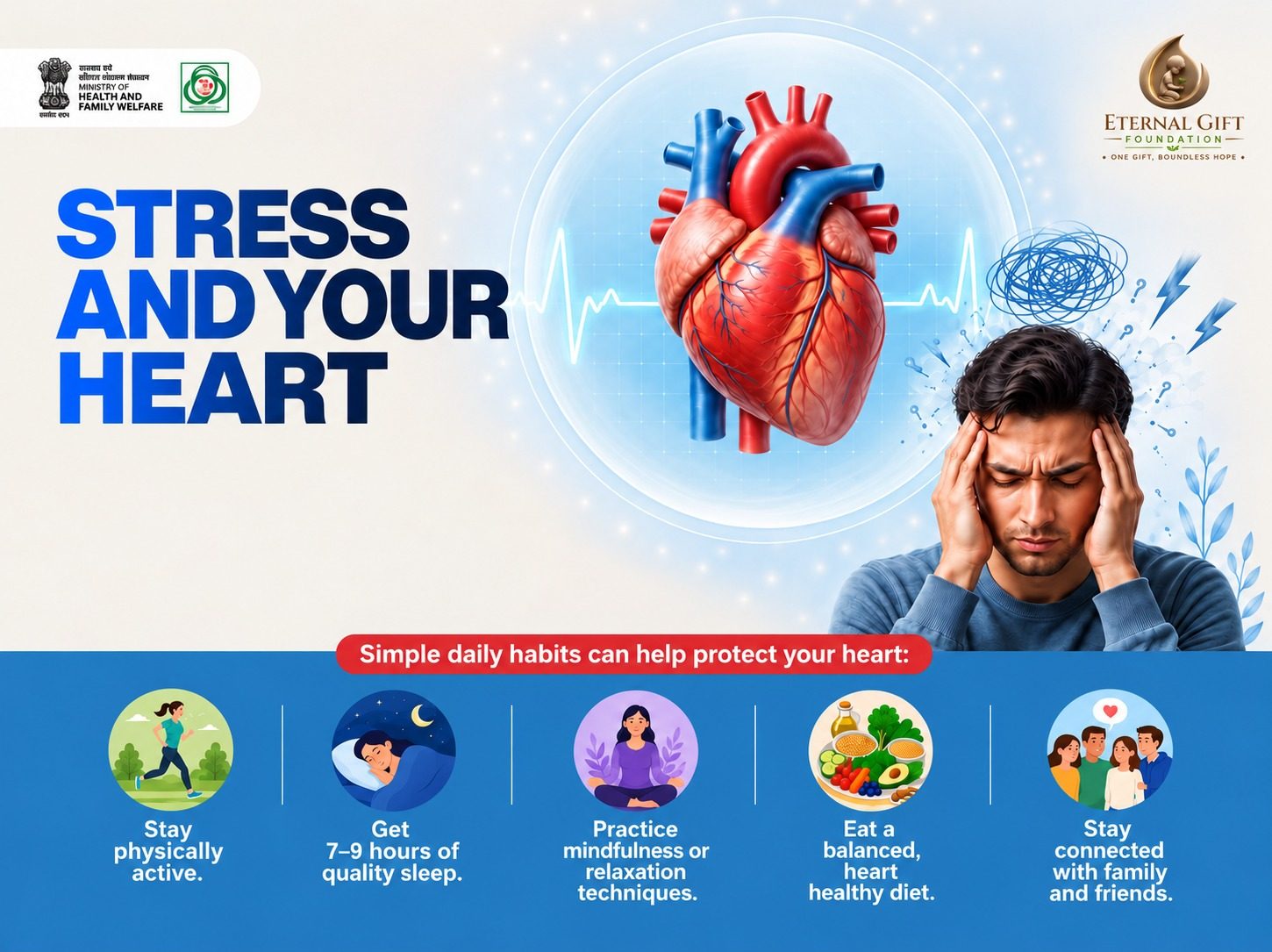
Long-term stress can raise blood pressure and strain your heart. Learn how — and five simple daily habits that help protect your cardiovascular health.
In today’s fast-paced life, stress has become part of the daily routine — at work, at home, on the road and on our screens. A little stress is normal. But when it never switches off, it takes a real physical toll, and the heart is one of the organs that feels it most.
Supported by the Ministry of Health and Family Welfare, Eternal Gift Foundation is sharing five simple, practical habits to help keep your heart strong and resilient.
How stress affects your heart
When you feel stressed, your body releases hormones such as adrenaline and cortisol. Your heart beats faster and your blood pressure rises — the body’s way of preparing to face a challenge. That response is useful for a short while.
The trouble begins when stress becomes constant. A body that stays on high alert keeps blood pressure and heart rate raised for long periods. Chronic stress also pushes many of us towards habits that harm the heart: poor sleep, skipped exercise, smoking, alcohol and comfort eating. Over time, unmanaged stress adds to the risk of high blood pressure and heart disease.
Five simple daily habits to protect your heart
- 01Stay physically active. Brisk walking, cycling, swimming, yoga or a game you enjoy all improve circulation and ease stress. Aim for at least 150 minutes of moderate activity a week — about 30 minutes on most days — and start gently if you are new to exercise.
- 02Get 7–9 hours of quality sleep. Restful sleep gives your heart and blood vessels time to recover and helps regulate stress hormones. Keep regular sleep times, and put screens away before bed.
- 03Practise mindfulness or relaxation. A few minutes of slow, deep breathing, meditation, pranayama or yoga each day can calm an anxious mind and help your body step out of “alert” mode.
- 04Eat a balanced, heart-healthy diet. Fill your plate with vegetables, fruits, whole grains, pulses and nuts, with healthy fats in moderation. Cut back on salt, sugar, fried and processed foods.
- 05Stay connected with family and friends. Talking, laughing and spending time with people you trust lowers emotional stress. If stress feels overwhelming, reaching out for support is a sign of strength.
Know your numbers
High blood pressure, high blood sugar and high cholesterol often cause no symptoms at all — until they cause damage. Regular check-ups tell you where you stand, so you can act early. This is the heart of Sabse Pehle Sehat, Eternal Gift Foundation’s campaign to put prevention first: at our Health Promotion Drive in Bhubaneswar, 565 people received free check-ups and consultations, including from a cardiologist.
Protecting your heart also protects your other organs. Many cases of end-stage organ failure begin with conditions like high blood pressure and diabetes that could have been managed earlier — which is why, for an organ donation foundation, prevention matters so much.
When to get help straight away
Questions people often ask
Can stress really affect your heart?
Yes. Stress hormones raise your heart rate and blood pressure. When stress is long-lasting, this strain — together with stress-related habits such as poor sleep, smoking and unhealthy eating — can increase the risk of high blood pressure and heart disease.
What are simple ways to reduce stress for a healthy heart?
Stay physically active, get 7–9 hours of quality sleep, practise mindfulness or relaxation techniques, eat a balanced heart-healthy diet and stay connected with family and friends.
How much exercise is good for the heart?
Aim for at least 150 minutes of moderate activity, such as brisk walking, every week — about 30 minutes on most days. Check with your doctor before starting if you have a heart condition or other health concerns.
How much sleep do adults need for heart health?
Most adults need 7–9 hours of good-quality sleep each night. Regular, restful sleep helps the heart and blood vessels recover and keeps stress hormones in balance.
What are the warning signs of a heart attack?
Chest pain, pressure or tightness, pain spreading to the arm, jaw, neck or back, sudden breathlessness, cold sweats, nausea or light-headedness. Call 108 or go to the nearest hospital immediately.
This article is for general awareness and is not a substitute for medical advice. Please consult a qualified doctor about your own health. See our medical information disclaimer.